
Our Services
TMJ & Bruxism Treatment
Relief from jaw pain, clicking, and teeth grinding — diagnosed and treated in-house at Vandervoort Family Dentistry.
Understanding TMJ
It’s more than a sore jaw — and we can help.
Dentistry addresses more than just your teeth. When jaw pain, bite problems, or joint dysfunction are affecting your daily life, that’s something we take seriously. “TMJ” stands for the temporomandibular joint — the hinge that connects your lower jaw (mandible) to the temporal bone of your skull. When that joint isn’t working as it should, we call it a temporomandibular disorder, or TMD.
TMJ disorders can develop from a range of causes: trauma to the jaw or face, tooth misalignment that puts uneven stress on the joint, arthritis affecting the joint itself, or chronic muscle tension from stress or clenching. Often it’s a combination of factors, which is why effective treatment starts with a thorough evaluation rather than a one-size-fits-all protocol.
If symptoms appear early — occasional clicking without pain, for example — intervention may not be immediately necessary, but evaluation is always worthwhile. Left untreated and allowed to progress, TMJ disorders can become significantly more limiting, and in extreme cases may require surgical intervention. Catching and managing it early is almost always the better path.
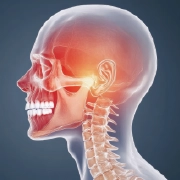
The temporomandibular joint connects the lower jaw to the skull — when it’s not working well, you feel it throughout your head, neck, and face.
Recognizing the Signs
Common TMJ Symptoms
TMJ disorders can show up in ways that don’t immediately suggest your jaw — which is part of why they go undiagnosed for so long. If any of these sound familiar, it’s worth a conversation.
- Headaches, especially in the morning or after periods of stress
- Earaches or a feeling of fullness in the ears
- Difficulty or soreness when opening and closing your mouth
- Jaw clicking, popping, or a grinding sensation when chewing
- Pain or tenderness in the jaw muscles
- Facial soreness that spreads to the neck and shoulders
Our Approach
Why Choose Vandervoort for TMJ Care
- Thorough evaluation before any treatment recommendation
- Personalized treatment plans — not a standard protocol
- Custom oral appliances fitted and adjusted in-house
- Addresses both TMJ and bruxism as part of the same care plan when present together
- Continuity of care — the same team that diagnosed you manages your treatment
Teeth Grinding
Understanding Bruxism — and why it matters.
Bruxism is the habitual grinding or clenching of teeth, and it’s more common than most people realize. It often happens at night during sleep, which means many patients don’t know they’re doing it until a partner mentions it — or until we notice the wear patterns at a routine checkup.
Daytime bruxism also occurs, often unconsciously during concentrated tasks or stressful moments. Whether it happens at night or during the day, the cumulative force placed on your teeth, jaw muscles, and joints is significant. Over time, untreated bruxism can wear down enamel, cause tooth sensitivity and fractures, contribute to jaw muscle fatigue, and worsen existing TMJ dysfunction.
The causes are multifactorial. Stress and anxiety are the most common drivers. Sleep disorders, certain medications, and bite misalignment can all contribute. Understanding what’s driving your bruxism helps us choose the right treatment approach.
Symptoms to Watch For
Signs You May Be Grinding Your Teeth
- Teeth that look flattened, chipped, or worn down
- Increased tooth sensitivity, especially to temperature
- Waking up with jaw soreness, tightness, or a headache
- A sleep partner reports hearing grinding sounds at night
- Cheek tissue that appears bitten or indented on the inside
- Unexplained facial fatigue or pain during the day
How We Treat It
Your Treatment Plan at Vandervoort
Every case starts with a thorough exam — we don’t recommend treatment until we understand what’s actually happening.
Evaluation & Diagnosis
We examine your jaw joint, bite, and teeth for signs of dysfunction or wear. We’ll ask about your symptoms, sleep patterns, and stress levels to get a complete picture before recommending anything.
Custom Oral Appliance
For most patients, a custom-fitted night guard or occlusal splint is the first and most effective step. It protects your teeth from grinding forces and helps the jaw muscles relax — reducing pain and preventing further damage while you sleep.
Bite Adjustment & Follow-up
Where bite misalignment is contributing to the problem, we can address it directly. We monitor your progress at follow-up appointments, adjusting the appliance as needed and ensuring the treatment is working before closing the case.
Have Questions?
Frequently Asked Questions
Explore More
Explore Our Services
Restorative Dentistry
Crowns, bridges, implants, and full-mouth rehabilitation — restorative care planned around what you actually need.
Learn More →Preventive Dentistry
Cleanings, exams, and early intervention — preventive care that keeps your whole mouth healthy over the long term.
Learn More →Patient Comfort
From warm blankets to IV sedation, we make every effort to ensure your visit is as comfortable and stress-free as possible.
Learn More →What Patients Say
“Great dentist office. Have been going since I was a little kid. They care about their patients and treat everyone with respect. They are highly educated and can confidently inform you regarding your dental health so you can make the best decisions for your health.”
— Tanner S.
Read More ReviewsReady to get some relief?
If jaw pain, grinding, or clicking is affecting your daily life, let’s take a look. We’ll evaluate what’s happening and be straight with you about what will actually help.